For this story we were provided with data on interfaith marriages from the Pew Research Center. With this information we had to create a story using a focus-on-a-person lead. The challenge was getting interesting quotes and sources that someone would want to read about. After interviewing a lot of different people, I think I succeeded in finding a relatable angle to report on, and a way to humanize the data.
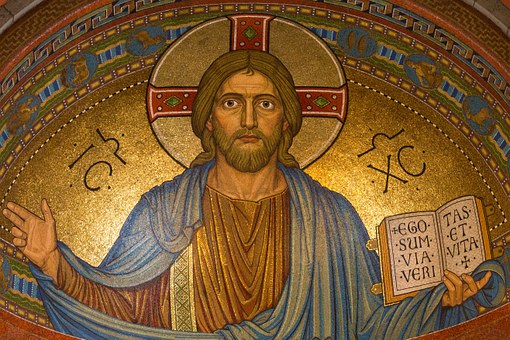
The percentage of Interfaith marriages are rising. The most common combination is one parent who identifies as Catholic and the other as Protestant.
Interfaith Marriages are at an All Time High
Growing up with parents who had two distinctly different religious backgrounds gave Boston-raised Elziana Dos Santos religious acceptance at a young age. Her mother was brought up Jehovah’s Witness, while her father was Catholic. However, when Dos Santos’ parents had children, her mother did not want to raise them in the Jehovah’s Witness religion. Dos Santos was brought up Catholic like her father, but she was also taught about the Jehovah’s Witness faith. Her grandmother, aunts and cousins were Jehovah’s Witnesses. She grew up knowing the beliefs of both religions and while she always attended Sunday mass, she sometimes went to Jehovah’s Witness meetings with her grandmother as well.
Dos Santos’ story is not unusual, however. The number of Americans raised in mixed religious homes is on the rise.
“One-in-five U.S. adults were raised in interfaith homes” according to a study done by the Pew Research Center.
The percentage of adults in America who were raised in mixed religious homes is at an all time high. Rising eight percent from the Baby Boomer generation, the Pew Research Center found that 27 percent of Millennials were raised in interfaith homes. They report that the most common combination is one parent who identifies as Catholic and the other parent as Protestant.
Father Dan Hennessey of Saint Mary’s Parish in Waltham, Mass, said that he frequently sees interfaith couples. Because the Catholic church does not require the non-affiliated party to convert, parishioners have “always [been] accepting” of mixed religious couples, said Hennessey.
Gaby Molinar of Tewksbury, Mass, was raised Presbyterian because of her mother’s faith. While her father was a Baptist, he never fought over how she would be brought up. Since interfaith marriages are nothing new in many Christian churches, both sides of Molinar’s family were accepting of the way she grew up.
Hennessy said that sometimes, when couples decide to get married religion is “not necessarily the first thing” they think about. When two people “fall in love” and “want to be together for the rest of their lives” their first focus is not always religious affiliations.
Many churches offer courses for couples who are preparing for marriage. In the Catholic church it is called Pre-Cana, and one thing it helps to do is settle disputes that may arise among interfaith couples regarding religion. Hennessey said that one of the importances of Pre-Cana is to make sure that the “non-Catholic party [does] not put obstacles in the way” of the Catholic person’s faith. Raising children in the Catholic church and going to mass regularly are common questions that are brought up.
Hennessey said that because “culture is becoming more diverse” interfaith marriages have been on the rise and “religious diversity” is becoming more apparent and accepted.
The Pew Research center found that “Nearly three-quarters of those raised by parents from different religious backgrounds [said] their parents disagreed little, if at all, about religion.” This can be seen in Dos Santos’ family. She says that “There was never any fighting…each side shared their beliefs with us.”
 Emilie Rae